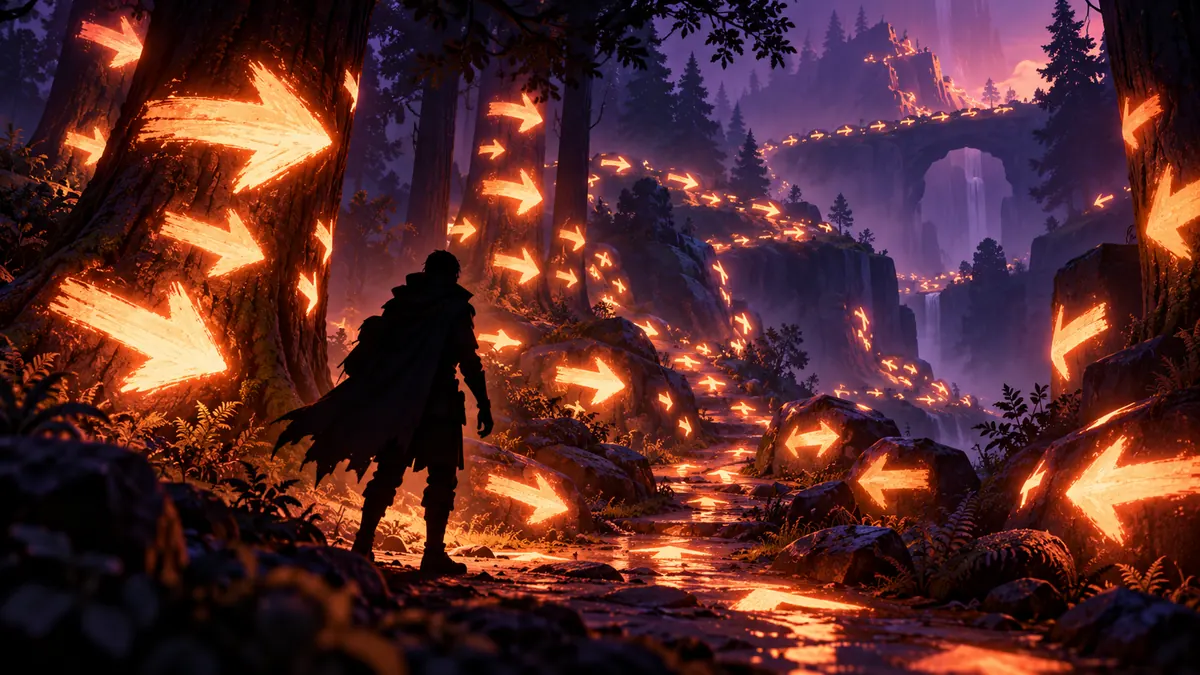
Marvel's Wolverine has been one of the year's biggest games, and The Act Man's new video essay uses it to make a wider complaint. His argument is that modern big-budget games increasingly hold the player's hand, and that Wolverine, a mature-rated game about one of comics' most self-reliant heroes, is a clear example. It is an opinion piece, and a pointed one, but the questions it raises are ones a lot of players are asking.
For what Insomniac set out to build, our report on Wolverine's Rage, Adaptations and New Game Plus covers the features Sony and Insomniac described ahead of launch.
What he means by hand-holding
The Act Man starts with a definition. For him, hand-holding is the pile-up of excessive tutorials, directional arrows, pop-ups and dialogue that exists only to explain mechanics or point out an enemy's weakness, without any story reason for it. It is not about difficulty as such; it is about a game that never trusts you to work things out.
Accessibility versus the default
This is the most careful part of the video, and the most useful. The Act Man is clear that accessibility features are good when they are optional. His problem is when that kind of help is switched on for every player, with no way to turn it off. That is a meaningful distinction: the same feature can make a game playable for one person and patronising for another, and the fix is a menu option, not its removal.
Paint, prompts and talking to yourself
The rest of the essay widens the lens. He argues that heavy-handed guidance, from torches and flashing lights to white paint across climbable surfaces, damages a game's art direction. He criticises quick-time events that succeed whether or not you press the button, saying they lose their purpose if you are not required to react. And he is tired of protagonists who narrate instructions and puzzle solutions out loud, which he finds repetitive and unnecessary.
Why he thinks it keeps happening
His explanation is money. The Act Man argues that very large budgets put pressure on publishers to simplify games so they reach the widest possible audience.
That is a reasonable argument, but it is an argument. A big game with lots of guidance and a hard game that sells well can both exist, and his video doesn't show that budgets cause the first. What it does show, with specific examples, is how much of the guidance in one popular game players are given no choice about.
What viewers said
The comment section was firmly on his side, and funny about it. The most-liked comment made the best counterpoint: a reference to BioShock's "would you kindly" as proof that hand-holding doesn't have to be negative if a game knows how to use it. Others mocked mature-rated games that treat players like children, joked about a funeral without a "press F" prompt, and pointed to God of War Ragnarök's quick puzzle hints as an earlier example of the same habit.
From the creators
Watch the video
Reporting notes