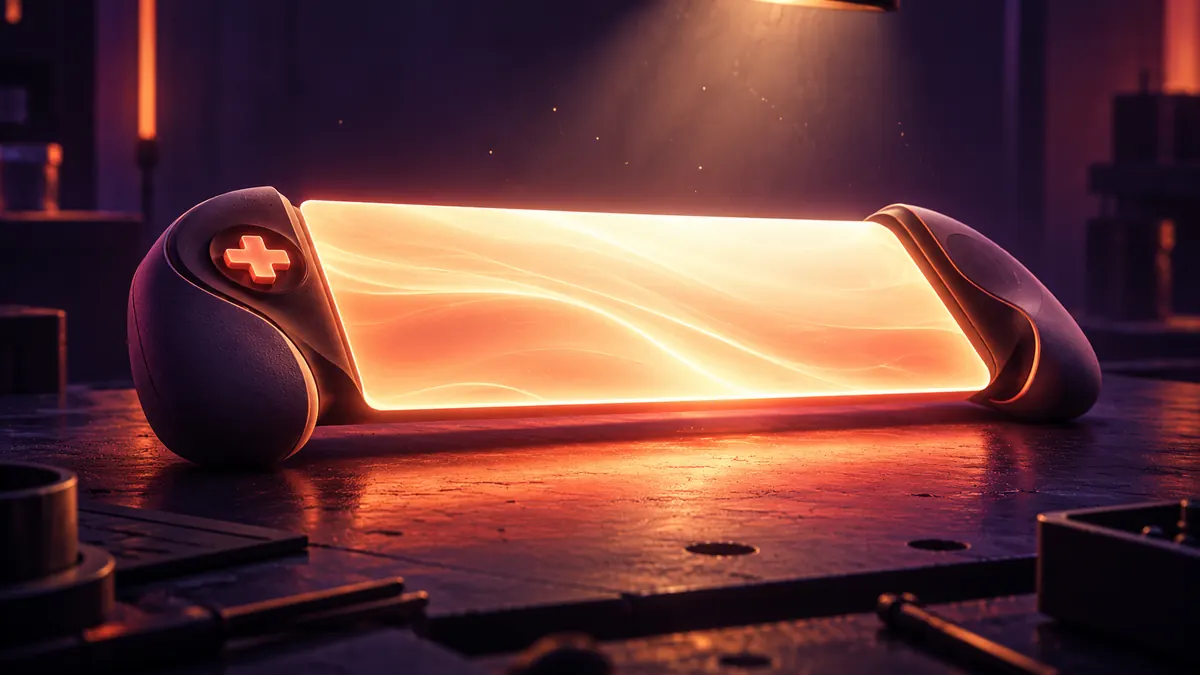
Acer has finally brought a gaming handheld to the US, and ETA Prime has had his hands on it. His first look at the Predator Atlas 8 is broadly positive, with one big exception that matters a lot if you play fighting or platform games: the D-pad.
What it is
According to Engadget, the Predator Atlas 8 is selling in the US exclusively through Best Buy for $1,300, with stores getting it on 1 November, and only one configuration: the higher-end Intel Arc G3 Extreme version with Intel Arc B390 graphics, an 8-inch 120Hz IPS screen and 24GB of LPDDR5x memory. Engadget also reports that Best Buy's pre-orders sold out immediately. It runs Windows 11, so it competes directly with the ROG Ally, Legion Go and MSI Claw families.
What's in the box
He also shows what you get for the money: a 65W charger and a stand in the standard box, with a premium bundle that adds a hard carrying case (01:24). It is a small detail, but at this price a case in the box is worth knowing about before you buy one separately. He then runs the usual synthetic benchmarks, Geekbench and 3DMark, to set a baseline against other handhelds (09:51).
The hardware
ETA Prime unboxes it and walks through the ports, buttons and grips, and compares its weight with rival handhelds (02:00). He likes how it looks, though he notes it borrows heavily from MSI's Claw designs (04:33), and he wishes Acer had used the faster microSD Express card standard instead of UHS-II (02:15). The controls get a close look too, from the Hall-effect triggers and TMR sticks to the extra macro keys (04:32).
The D-pad problem
The one clear miss is the D-pad. He finds it mushy, without tactile feedback (05:04), and after testing Street Fighter 6 (11:06) he concludes it is not good for fighting games (12:12). For a $1,300 handheld that sells itself on being a premium device, that is a meaningful flaw for anyone who plays games that lean on directional input.
Software and settings
Acer's PredatorSense app handles performance modes, fan curves and gyro, alongside Intel's own graphics software (05:44). He particularly likes Intel's precompiled shaders, which save the usual wait when you first launch a game (08:31). He does think Acer's default Turbo power profile needs adjusting to match other devices built on the same Intel chip (10:19), so expect some tinkering to get the most from it.
Games
His game testing runs from Forza Horizon 6 and Spider-Man 2 at 1200p medium settings to Doom: The Dark Ages, Crimson Desert with frame generation, and Gears of War: E-Day with frame generation on and off (12:16, 15:16). The broad picture is a capable machine for current games at sensible settings, with Intel's XeSS frame generation doing a lot of the heavy lifting in the most demanding titles.
Verdict so far
ETA Prime's summary is simple: he likes the design, the ergonomics and the screen, and strongly dislikes the D-pad (15:55). If you mostly play with analogue sticks, it looks like a strong new option. If you play fighting games or 2D platformers, his test suggests waiting for more reviews, or for a fix.
Viewers were excited, with several saying theirs was arriving within hours or days, one reporting a successful SSD upgrade, and others hoping for restocks after the pre-order sell-out.
From the creators
Watch the video
Reporting notes