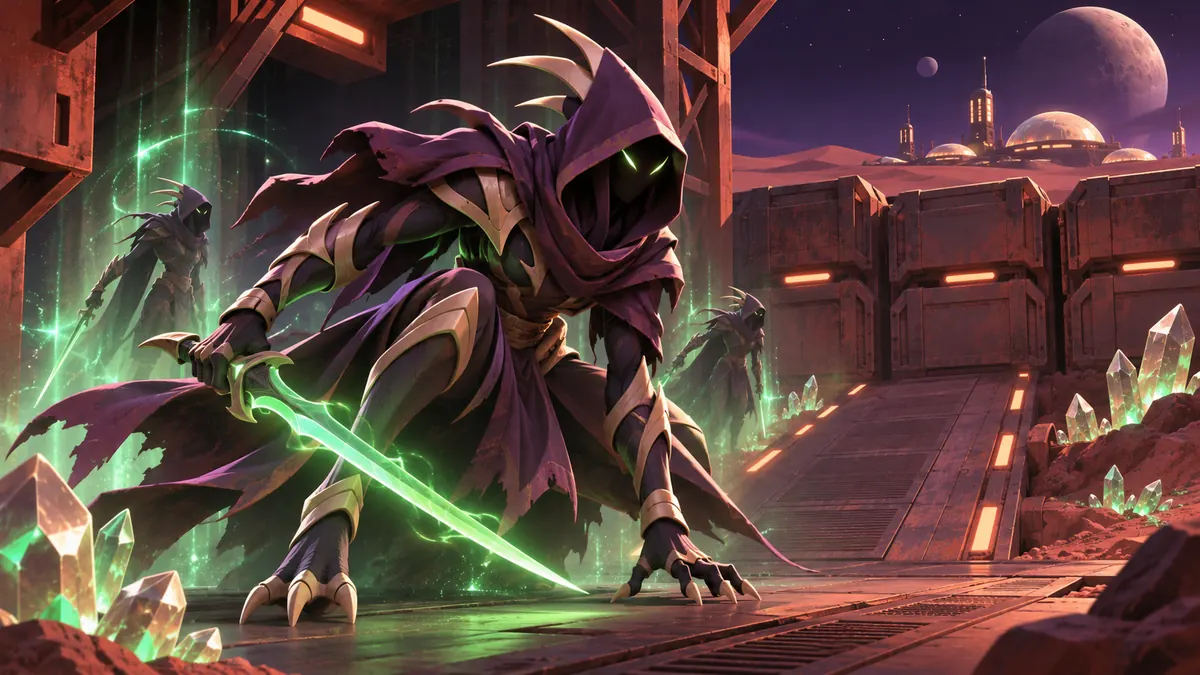
Two StarCraft II creators had the same idea in the same week: get invisible sword-aliens into the enemy base as quickly as possible. What makes them worth watching together is that they don't sell you the same lesson.
Harstem's video takes the Dark Templar rush through several matchups and stops to show off an odd control trick. uThermal's throws the build at Korean Grandmaster opponents for three games.
This is a guide to what they show and argue, not a report from our own ladder. The strategy calls below are theirs unless we say otherwise.
The plan, and the thing that breaks it
The appeal is simple. Dark Templar are cloaked, so an opponent who can't detect them can't fight back properly. The race is between your first units and their first answer.
Against Terran, uThermal says the Dark Shrine isn't enough by itself. The argument is that you also want a Robotics Facility for a Warp Prism, so a walled-off ramp doesn't keep you out (1:10). Think of it as two keys for two locks: cloak gets you past the army, the Prism gets you past the wall.
The first game shows why that matters. uThermal argues that even when the build looks compromised, one drop in the main base can swing everything (4:35). Commenters noticed, with one saying they had written that game off before the comeback.
Game two is the short version. The Terran opponent hadn't finished a wall, and the Templar went straight in (11:15). uThermal's reading is that the rush punishes openings that skimp on early safety (13:00).
Where Harstem pushes back
Harstem is less keen on that matchup. The view here is that rushing Dark Templar into Terran is flawed, because Terran players get detection from scans and from Ravens in their ordinary builds (20:03).
Then Harstem goes and wins with it anyway. The Terran moves out to attack, the Templar run into the main, and that's that (23:42).
Funny? Yes. A contradiction? Not really. A weak plan can beat an army that's in the wrong place. The next Terran game shows the other side: Harstem finds turrets and heavy defences waiting (31:05) and has to win it with a different army (32:30).
The Protoss mirror is a warning too. Harstem gets caught out of position and loses (19:39). uThermal's mirror match is messier but winnable: the opponent spots the rush, so the plan becomes a Stalker, Immortal and Archon army (15:40).
The backup plan is the real skill
Put the two videos side by side and the shared lesson isn't speed. It's what happens on the minute after the surprise stops working.
uThermal's advice is to keep building workers behind the attack so a failed rush doesn't leave you broke (8:15). Harstem's mirror-image point is aimed at the defender: betting your whole game on countering one sneaky build, without scouting, is a wild risk (33:43).
Both are the same habit. Make a plan that still works after you're wrong.
About that double Blink
Harstem's other hook is a quirk. With Stalkers and Dark Templar selected together, the video shows Dark Templar Blink being used without cycling to that unit group (3:40). Harstem treats it as either a handy convenience or a bug (0:15).
The comments were less surprised. Several viewers insisted it has worked that way for years. That's their recollection, and we haven't confirmed when the behaviour arrived.
What to try first
Our suggestion, if you're learning: watch uThermal's opening game for the execution, then Harstem's Terran games for the reality check. Pick one scouting question to ask every time you open this way, such as whether you've seen detection yet. If the answer is yes, switch early. Harstem's later win is a good picture of what that switch looks like.
And if you're on the receiving end, one uThermal viewer had the healthiest response going: double down on detection for a couple of weeks.
From the creators
Watch the videos
Reporting notes