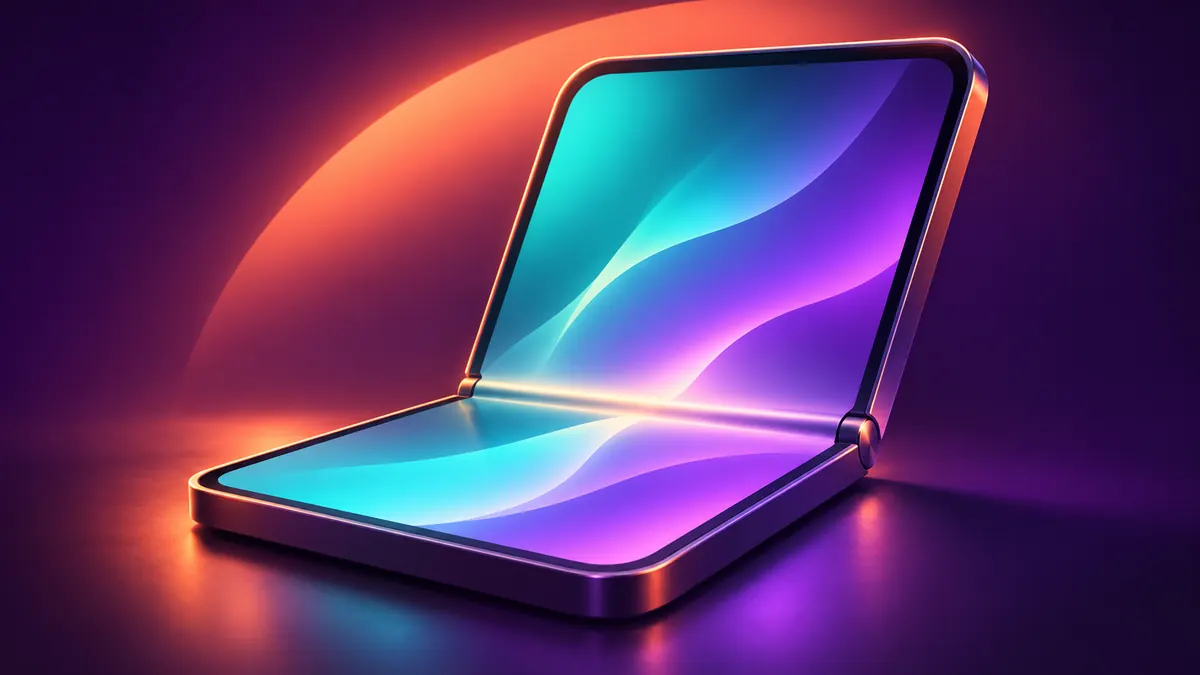
The iPhone Duo is getting a way to unlock just by looking at it. The most revealing part of the news is how little the feature is allowed to do. According to 9to5Mac, the second iOS 27.3 beta adds "a new face recognition option that lets you unlock your iPhone Duo by looking at it." MacRumors reports the same change and says it's in the second iOS 27.3 beta, which Apple seeded to developers on Monday.
A note on sourcing: we couldn't check Apple's own material directly, so every detail below is credited to the outlet that reports it.
Not Face ID, according to 9to5Mac
9to5Mac is blunt about this: "This isn't Face ID." The site says the feature uses the front camera on the iPhone Duo's outer display to recognize your face, and that "the iPhone Duo doesn't have the hardware needed for Face ID." For background, Face ID arrived with the iPhone X in 2017 and relies on a dedicated depth-sensing camera system, not a standard front camera. That difference explains why most of this story is about limits.
9to5Mac quotes the text Apple shows in Settings: "Use the front camera, along with a recent Touch ID or passcode authentication, to quickly unlock iPhone Duo when it's closed. Face recognition data never leaves your device."
The phrase to notice is "recent Touch ID or passcode authentication." The face check doesn't work by itself. It depends on an authentication you've already done. Both outlets describe the limits that follow from that:
- It only unlocks the phone. According to 9to5Mac, you'll still need Touch ID or your passcode for Apple Pay, your passwords, unlocking apps and anything else that needs authentication. MacRumors reports the same and adds that the face option is only available on the Lock Screen.
- It times out. According to 9to5Mac, after 45 minutes of inactivity you have to authenticate again with Touch ID or your passcode. Face unlock stays off until you do.
- It only works when the phone is closed. 9to5Mac reports that the feature doesn't work when the iPhone Duo is unfolded. Unfolded, you're back to Touch ID or the passcode.
9to5Mac gives the reason for all of this directly: "Because this isn't as secure as Face ID, Touch ID, or your passcode, Apple has implemented a few guardrails." According to 9to5Mac, the option is in Settings under Touch ID & Passcode.
Lock when closed
The second change is less flashy. According to 9to5Mac, iOS 27.3 adds an option under Display & Brightness that makes the iPhone Duo lock when you fold it, instead of moving what you were doing from the inner display to the outer one.
9to5Mac editor-in-chief Chance Miller writes that "many iPhone Duo users (myself included) have said Apple should do this." He says he had been using a shortcut to get the same behavior, and that he's glad Apple "has listened to user feedback and added a default setting for it."
Part of a wider Duo catch-up
These two features build on other Duo-specific work in this release cycle. 9to5Mac says the first iOS 27.3 beta brought Reachability to the iPhone Duo, which "shifts content horizontally toward either side of the display to make one-handed use easier." MacRumors notes that iOS 27.2 was the release that put the iPhone Duo on the same version of iOS as Apple's other iPhones.
For now, all of this is beta-only. MacRumors says beta 2 came two weeks after the first iOS 27.3 betas and that iOS 27.3 will come out in December. Features can change or be pulled before a public release, so treat the details above as provisional.
Mason's take: The guardrails are the real story, and I think Apple set them correctly. A camera-only face check that could approve Apple Pay would be a security problem. One that only gets you past the Lock Screen, times out after 45 minutes and switches off when the phone is open reads to me as a convenience feature, not a security one. What's more telling is that Apple shipped it at all. On the iPhone, the biometric options have been Touch ID or Face ID. Adding a weaker tier, even one this restricted, suggests Apple now sees everyday friction on a new device as a bigger problem than a less secure unlock. Together with Reachability and the lock-when-closed setting, it looks like Apple is using point releases to fix the first Duo's rough edges in software instead of waiting for new hardware. That's a sensible trade-off, and I wouldn't be surprised if the same tiered approach appeared on other Apple devices that don't have Face ID.
Reporting notes