A gaming PC is usually judged by the games. ETA Prime's look at the MSI EdgeMesa N AI+ does run some, but the more interesting stretch of the video is spent asking a small box to sort documents without an internet connection.
That order of priorities matters beyond one machine. It says something about who this new class of PC is being built for, and whether the people who usually watch mini PC videos are still that audience.
This is an assessment of ETA Prime's published video, read alongside PCWorld's account of the same machine. We haven't tested one.
What's in the box
The description lists a 20-core Arm processor, an Nvidia Blackwell GPU and 128GB of unified memory, running Windows 11 on Arm within a 140W system. Unified means the processor and graphics share one pool, and the video shows how to assign part of it to the GPU through Nvidia's app (chapter from 3:42).
ETA Prime likes the hardware. The vapor chamber cooling is described as surprisingly quiet under heavy sustained load (2:04), and the platform is said to be more enjoyable in this higher-power desktop form than in lower-wattage laptops (3:44).
PCWorld's experience lines up. It calls the EdgeMesa gloriously quiet and says it finished one AI benchmark roughly 12 percent faster than an RTX Spark laptop. Our News report on ASUS's rival machine found reviewers describing similar gains.
The case ETA Prime makes best
The strongest argument is about how to use all that memory. ETA Prime thinks the practical approach isn't loading one enormous AI model but running several specialized ones together (6:40).
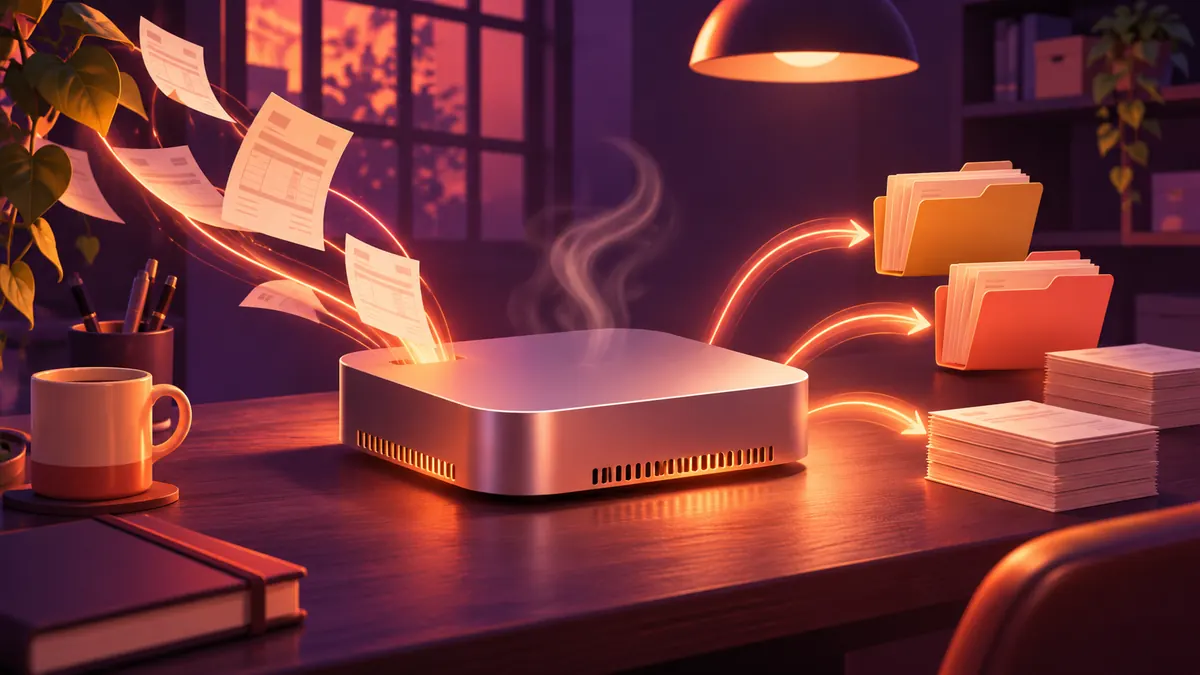
The demonstration has a locally run agent organizing documents and comparing supplier quotes (6:25), followed by offline image generation (10:47). ETA Prime then pitches local agents as valuable for small businesses that want to automate work without paying for cloud services (11:45).
PCWorld is friendly to that idea, with a stricter test. It says RTX Spark suits people pushing very large models, doing serious research or building systems that do economically valuable work. It doesn't recommend the price unless a specific AI workload can earn its keep.
The case that's harder to make
Gaming gets the last main section, with Cyberpunk 2077, Crimson Desert and Forza Horizon 6 at 1440p (from 14:34). The description says DLSS frame generation is part of that testing, which is worth remembering when you look at the frame counters.
ETA Prime is impressed by a 3DMark graphics result for something this compact (14:06), and puts the platform's main limit on software: translating Windows programs to Arm, rather than the hardware itself (17:28).
That's a hopeful diagnosis, since software can improve. But it describes the machine you may one day have, not the one on the desk. PCWorld puts the price at $7,500 and says this isn't a sensible upgrade for the average PC enthusiast. It also found the ports a nuisance, with USB-C and HDMI but no USB-A or DisplayPort.
What the audience is signaling
The early comments were dominated by cost, with viewers comparing the box unfavorably with a Mac or other mini PCs. Some simply thought it resembled a CD-ROM drive. One wondered why a channel they'd followed for games now talked about AI so much. Others said they would happily own one.
Comments aren't a market survey. Still, that last complaint gets at something real, and this is my analysis rather than anything ETA Prime says. Mini PCs built a following as cheap, clever little gaming and emulation machines. RTX Spark borrows the shape and changes the customer.
Who should care
As a video, this is a clear tour with a useful AI demonstration and a candid note about software. Its weakness is that it treats gaming and AI as two features of one product, when the price really only makes sense for one of them.
If you run local models for work, the document demo is the part to watch. If you want a small gaming PC, the sensible lesson is to wait, and to keep an eye on how quickly Windows on Arm improves.
From the creators
Watch the video
Reporting notes