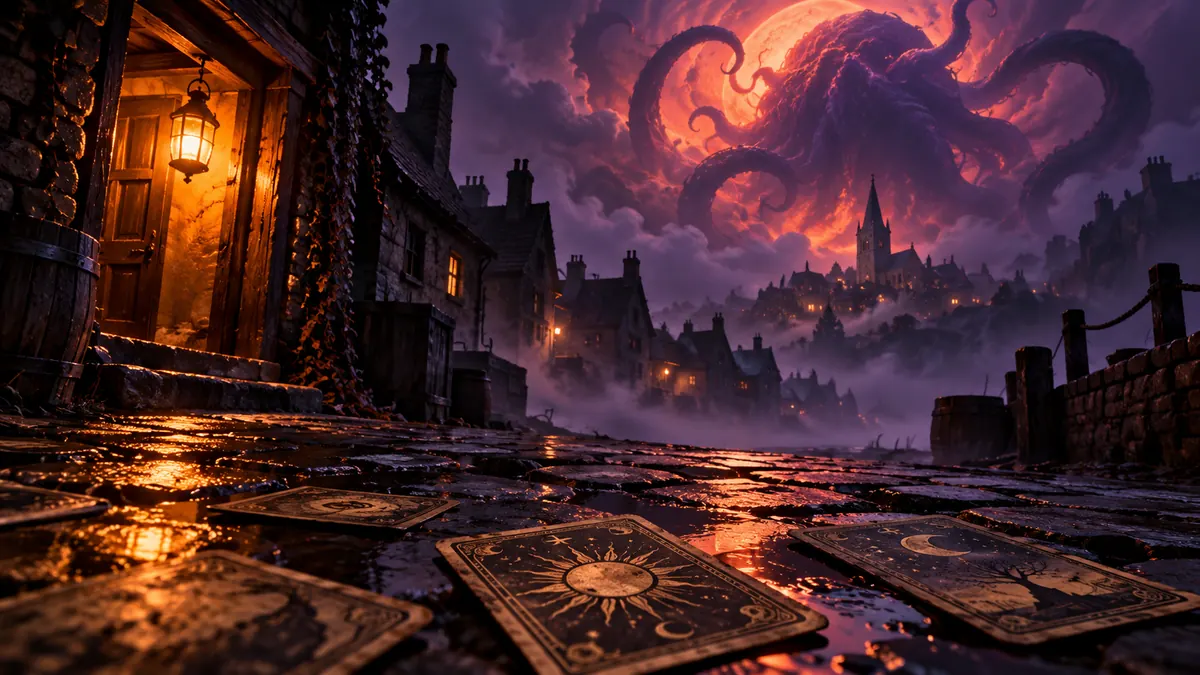
Some games need to be judged against their budget, and Mortismal Gaming's review of *Stygian: Outer Gods* makes that case from the start. He played it to 100% after it left Early Access, and his verdict is the sort that is more useful than a score: it is fun for what it is, it won't wow you, and whether you should buy it depends almost entirely on the price you pay.
What it is
*Stygian: Outer Gods* is a first-person Lovecraftian survival horror game, which Mortismal explains is set before the earlier *Stygian: Reign of the Old Ones* (02:40). He describes how the world is split into three acts, with environmental exploration, safe rooms and crafting (08:42), and how its story is built on a Lovecraftian premise with decisions along the way (07:28).
Judge it by its budget
Mortismal's framing is that understanding this is a low-budget game is the key to judging its quality and value (01:42). On that basis he thinks it is fairly priced at around $20 to $25, and wouldn't recommend it at $40 or more (02:08). It is an honest way to review a smaller game: not "is this as good as a big-studio horror release", but "is this worth what it asks".
What works
Atmosphere and exploration. He calls environmental exploration, atmosphere and puzzle-solving the strongest parts of the game (10:21). This is where the Lovecraftian setting does its job.
Character building. Progression runs on a tarot-card system of perks and smaller stat boosts, alongside difficulty settings he walks through (04:05). His practical tip for a single playthrough is to invest in the Speech skill, which opens up extra lore and dialogue (07:09).
What doesn't
Combat. This is his main complaint. He describes the melee as extremely janky and without tension (11:28), and points to enemy AI glitches that can be exploited (11:18). Taken together, he calls the weak combat and exploitable AI the worst parts of the game (13:25).
Technical rough edges. He reports technical problems and audio bugs (02:40). Steam Deck owners in particular should check his compatibility test before buying (13:40), because he found the game does not currently work properly there.
How it plays out
Mortismal's walk through the three acts gives a fair sense of pacing (08:42). Exploration does most of the work: you move between areas, solve puzzles, return to safe rooms to craft and store items, and piece together the story from what you find. His look at combat covers the boss fights too (11:18). His pros-and-cons summary near the end puts it plainly: the world is worth seeing, the fighting is something you put up with (14:15).
Verdict
Mortismal's bottom line is that the price is the game's saving grace (15:12). If you enjoy slow, atmospheric horror with puzzles and you can forgive clumsy fights, his review suggests it is a decent weekend at a low price. If combat matters to you, or you play on a Steam Deck, it is one to wait on.
Commenters mostly appreciated that he keeps testing Steam Deck performance, several said the worldbuilding tempted them despite the flaws, and a few who had played the beta said they were waiting for voice fixes.
From the creators
Watch the video
Reporting notes