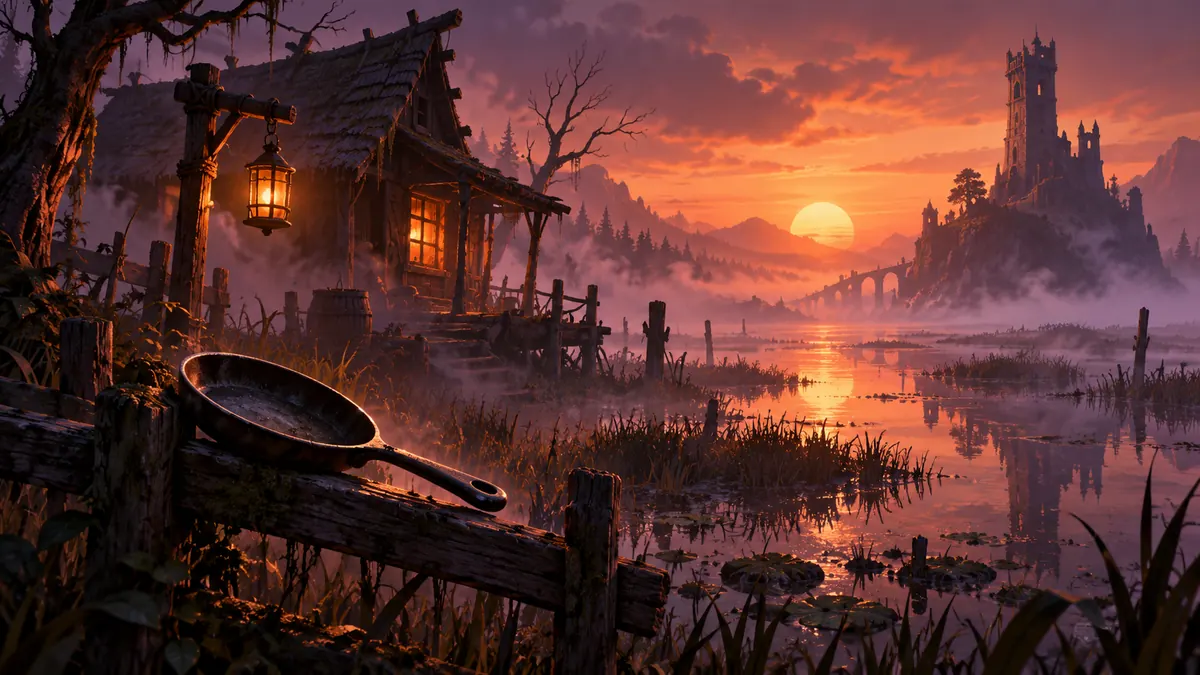
The Witcher 3 is more than a decade old, has just been remastered for a new generation of hardware, and still sits on almost every "best RPG" list going. Ask people why and they rarely mention the end of the world. They mention a frying pan. PC Gamer's long-running list of the game's best quests puts it neatly: the game is "10 percent Geralt's story and 90 percent the rest of the world's", and it is at its best "when it stops being about saving the world". This is a feature about that 90 percent: six side quests, chosen by us, that show what the game is actually doing. The picks and verdicts are opinion. The quest details are drawn from PC Gamer's coverage and CD Projekt's own description of the game.
A spoiler note before we go further: the sections below discuss how several quests unfold, and in one case how it can end. If you haven't played, the titles alone are safe.
The quest that sets the tone
Family Matters and Return to Crookback Bog. These are really one story, the Bloody Baron's, and they arrive in the first ten or so hours in Velen, when you would expect a game to be warming up. Instead you get a missing wife and daughter, a man who turns out to have driven them away, and a monster born of a miscarriage. Designer Paweł Sasko told PC Gamer the Baron was built as "a parallel to Geralt": two fathers who have lost the people they love, both with blood on their hands. Sasko also explained that the botchling came from a Slavic bestiary's poroniec, a name derived from the Polish word for miscarriage. The follow-up in the swamp can end in two very different ways depending on a choice made hours earlier, which is the first time many players realise the game remembers. It is the clearest case for why people replay: you want to see the other road.
The ones that look small
A Frying Pan, Spick and Span. An old woman in a riverside village has lost her pan. That is the quest. PC Gamer's writer found it "somewhat touching", and that is the point: Geralt helps because he is the kind of person who helps, grumbling or not. Our pick, because nothing else in the game explains its world as cheaply.
Contract: Devil by the Well. On paper, a monster contract. In practice, you examine the noonwraith's haunt, read the bestiary, and piece together who she was before you fight her. By the time you've brewed the potions, the fight has become an ending to someone's story.
A Greedy God. Two villagers worship a hungry deity who turns out to be a sylvan talking through a pipe. You can kill him or broker a deal that stops his followers starving themselves to feed him. It is the comic relief the Velen chapter badly needs, and still asks you to make a call about who deserves what.
The ones that surprise you
Carnal Sins. A serial-killer investigation in Novigrad with a personal stake through Priscilla, and a misdirection that can lead you to kill the wrong man. PC Gamer's Wes Fenlon notes that he "isn't really innocent at all, but isn't your killer". The payoff is a confrontation with something far older than the city.
The Play's the Thing. Geralt has to act in a play, and the game makes you remember your lines. No skill check saves you. It's the one people tell friends about, because it breaks the rule that RPG dialogue is a menu.
What ties them together
None of these six moves the main plot much. Each one, though, shows the game's habit of treating a small situation as if it matters to the people in it, and of letting a decision echo. That is why a remaster with better lighting, according to CD Projekt, still sells the same thing it always did: "a vast and complex world" full of "delightful and dreadful encounters with complex choices and consequences". The lighting is new. The reason to go back is the frying pan.
Reporting notes