BS The Legend of Zelda had a rule most games never have: you could only play it while it was on air. Miss the broadcast and that week's part of the game was gone.
Nintendo ran it in Japan in the mid-1990s, over a satellite, through an add-on for the Super Famicom called the Satellaview.
The way that system worked explains both why BS Zelda was so unusual and why so much of it is hard to experience today. So here's how it fitted together, piece by piece. One note on sourcing up front: we couldn't check Nintendo's own material from the period directly, so the details below come from the reporting of Nintendo Life, Time Extension and Kotaku, credited as we go.
How the Satellaview worked
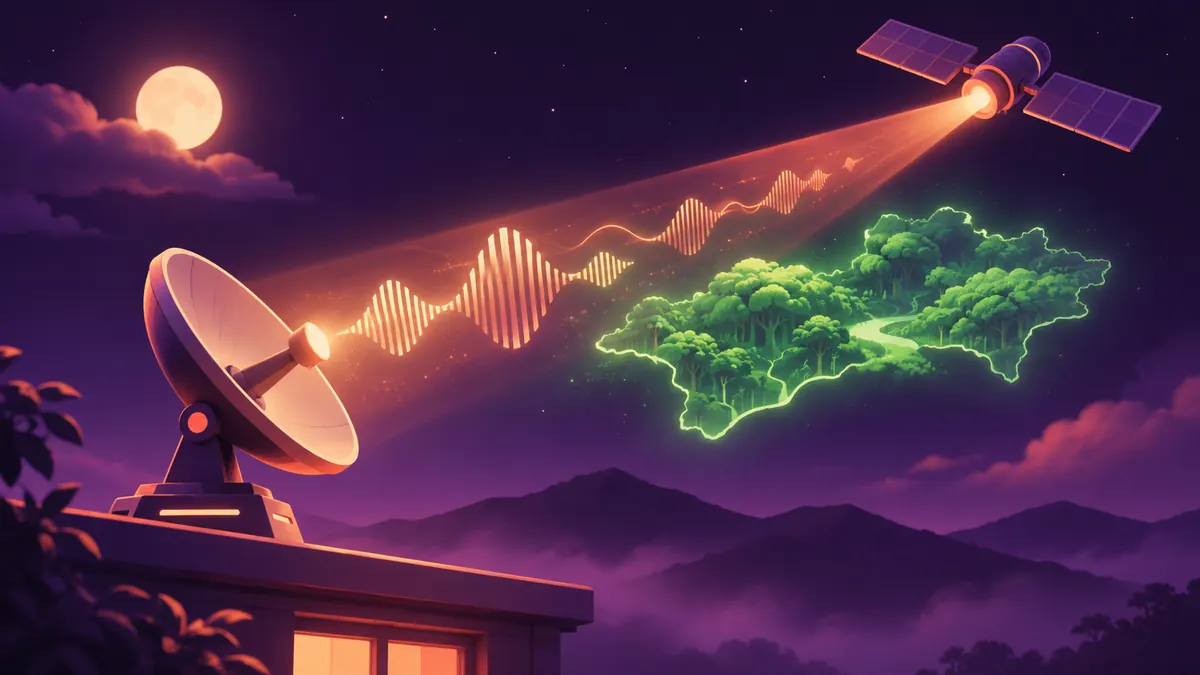
The Satellaview was a Japan-only add-on co-produced by Nintendo and the satellite radio company St.GIGA, according to Nintendo Life's Jonathon Greenall. He puts the retail price at around $150. A base unit plugged into the console's expansion slot and connected to a tuner and a satellite dish, and a BS-X cartridge doubled as the main menu. Nintendo also sold a memory pack for extra storage. Users connected to St.GIGA's satellite station to download games, magazines and shows, and Greenall says Nintendo funded the service by selling advertising space, the way a TV network would.
Time Extension's Jack Yarwood fills in the background in his history of the add-on. St.GIGA formed in 1990, started charging a subscription in March 1991, and by 1993 had about 40,000 subscribers and a reported $43.1 million loss. In January 1993 Nintendo paid $6.7 million for a 19.5% stake and became its largest shareholder. Yarwood also says the hardware was designed by Nintendo R&D2 and sold by mail order only.
The key system on top of all that was SoundLink. In Greenall's description, SoundLink games paired gameplay with live audio from the broadcast, and in-game events were timed to match what you heard: sometimes an audio drama, sometimes a radio-style show with music or chat. Yarwood says SoundLink brought in voice actors and high-quality music delivered during the live broadcast.
That design had a direct consequence. Because the audio was streamed live, Greenall explains, a SoundLink game was only playable during its pre-announced broadcast window, and slow players could miss events or fail to finish a story. Most SoundLink games ran in weekly episodes, each with its own goals. He counts more than 50 SoundLink games over the service's life, including Mario, F-Zero, Fire Emblem, Harvest Moon and Dragon Quest titles.
Zelda, on a timer
BS The Legend of Zelda was a remake of the original game. Greenall describes updated graphics, remixed maps and a clock under the life bar. The old man from the cave narrated as you played, and the map and mechanics changed based on what he said. Yarwood adds that you didn't play as Link: the BS-X player character took his place.
Greenall places the original in 1995 and calls it the most famous SoundLink game. Two follow-ups came. Nintendo Life lists BS The Legend of Zelda Map 2, without a date, and dates Ancient Stone Tablets, a remix of and sequel to A Link to the Past, to 1997.
When Kotaku covered Ancient Stone Tablets in 2016, Heather Alexandra described a four-week run with one hour of broadcast per week, with only certain parts of the overworld and dungeons open each week. In her words, "Satellaview Zelda games could only be played during broadcasted times".
Why it disappeared, and how fans brought it back
The service didn't last. Yarwood traces the end to business trouble at St.GIGA. In August 1998, after shareholders blocked a capital reduction at the broadcaster, Nintendo cancelled plans to supply it with games, and its planned follow-up service, BS4-II, was abandoned. Nintendo stopped providing new content in March 1999, and the service ended on 30 June 2000.
The live design is why so much went with it. Yarwood explains that regular downloads were saved to memory packs, but SoundLink titles were meant to be played alongside a studio broadcast that wasn't archived. Greenall puts it plainly: "A lot of Satellaview content has not been preserved". A dumped SoundLink game can be missing the narration that drove it. He notes that many presume Nintendo still has the original recordings in its vault, but doubts it will ever release them, since that would need permission from the voice actors, musicians and broadcasters involved.
That's where the community stepped in. Yarwood describes preservationists hunting down memory packs to dump, and the BS-X Project, led by LuigiBlood, working to emulate and document the service.
For Zelda specifically, Kotaku reported in 2016 that new patches had put Ancient Stone Tablets into English, French and German. Alexandra also described a dubbed recreation of the broadcasts, with orchestrated music and voice acting, which she said restored audio missing from the ROMs. It's a fan reconstruction of what the broadcasts did, not the original St.GIGA recordings.
Greenall argues that SoundLink was a forerunner of the limited-time seasons in games like Fortnite and Apex Legends, and writes that "It's a shame that Nintendo moved away from the SoundLink idea".
Beau's take: Greenall's comparison holds up, but I'd push it further. When a modern season ends, the game is still there for the next one. BS Zelda put the whole game on the clock and left the most important part, the narration, out of what players could keep. That's why fans are still rebuilding it. If Nintendo ever brings scheduled play back, I reckon the lesson is simple: keep the timer, but let players keep the show.
Reporting notes